

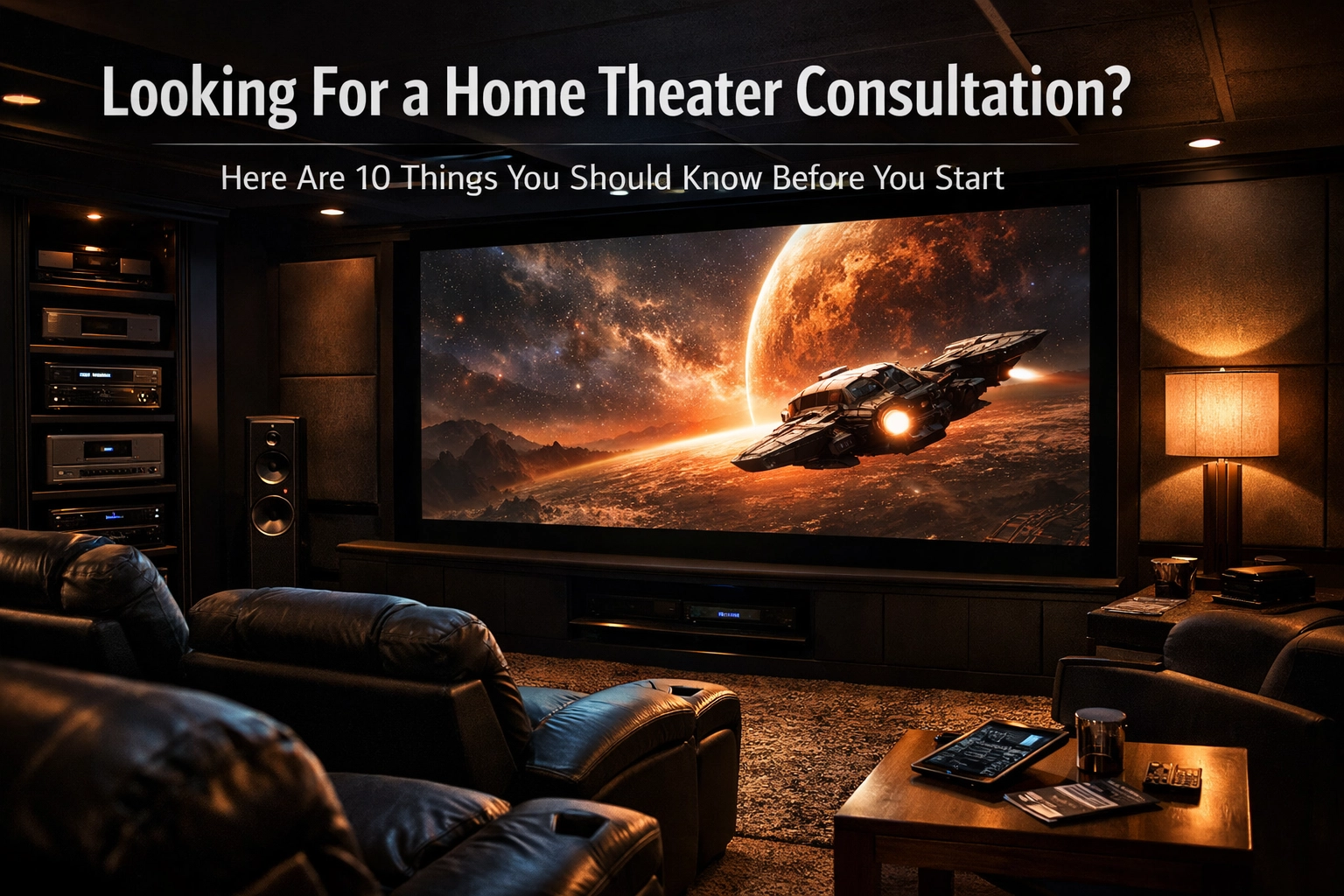
So, you’ve decided it’s finally time to pull the trigger on that dream home theater. Maybe you’re tired of the local cinema’s sticky floors, or maybe you just want the ultimate spot to watch the Vikings on a Sunday afternoon. Either way, you’re looking for a consultation to get things moving.
First off, let me tell you: you’re making a great move. A professional home theater setup is a total game-changer for your lifestyle. But before you invite a pro into your home, there’s a bit of homework to do. Think of it like this: you wouldn’t jump into building a house without knowing how many bedrooms you need or what your bank account looks like, right?
I’m Chad Alfords, CEO of New Age Technology, and I’ve seen it all. I want your consultation to be the most productive hour of your week. To help you get there, I’ve put together the 10 things you absolutely need to know before we start talking speakers and screens.
1. Real Talk: You Need a Budget
Let’s start with the big one. I know, nobody likes talking about money right out of the gate, but here’s the deal: having a clear budget is the best way to ensure your project actually happens. A "home theater" can range from a few thousand dollars for a solid media room setup to six figures for a dedicated, soundproofed cinema.
Establishing a range early on helps us prioritize what matters most to you. Do you want the crème de la crème of projectors, or would you rather spend that money on high-end multi-room audio that carries the sound throughout the house? Knowing your "comfortable" number and your "absolute max" number ensures we design a system that won't make your wallet cry.
2. Know Your Space (Inside and Out)
Size matters. Before your consultation, grab a tape measure. We’ll need to know the dimensions of the room: length, width, and especially the ceiling height. But it's not just about the numbers. Look at the "bones" of the room. Are there windows that will let in annoying glare? Is it a basement with concrete walls, or an attic with slanted ceilings?
Think about whether this is a dedicated theater (a room used only for movies) or a multi-purpose media room (where you might also have a bar or a pool table). The way we design for a basement in St. Louis Park is going to be very different from a sun-drenched living room in Golden Valley.
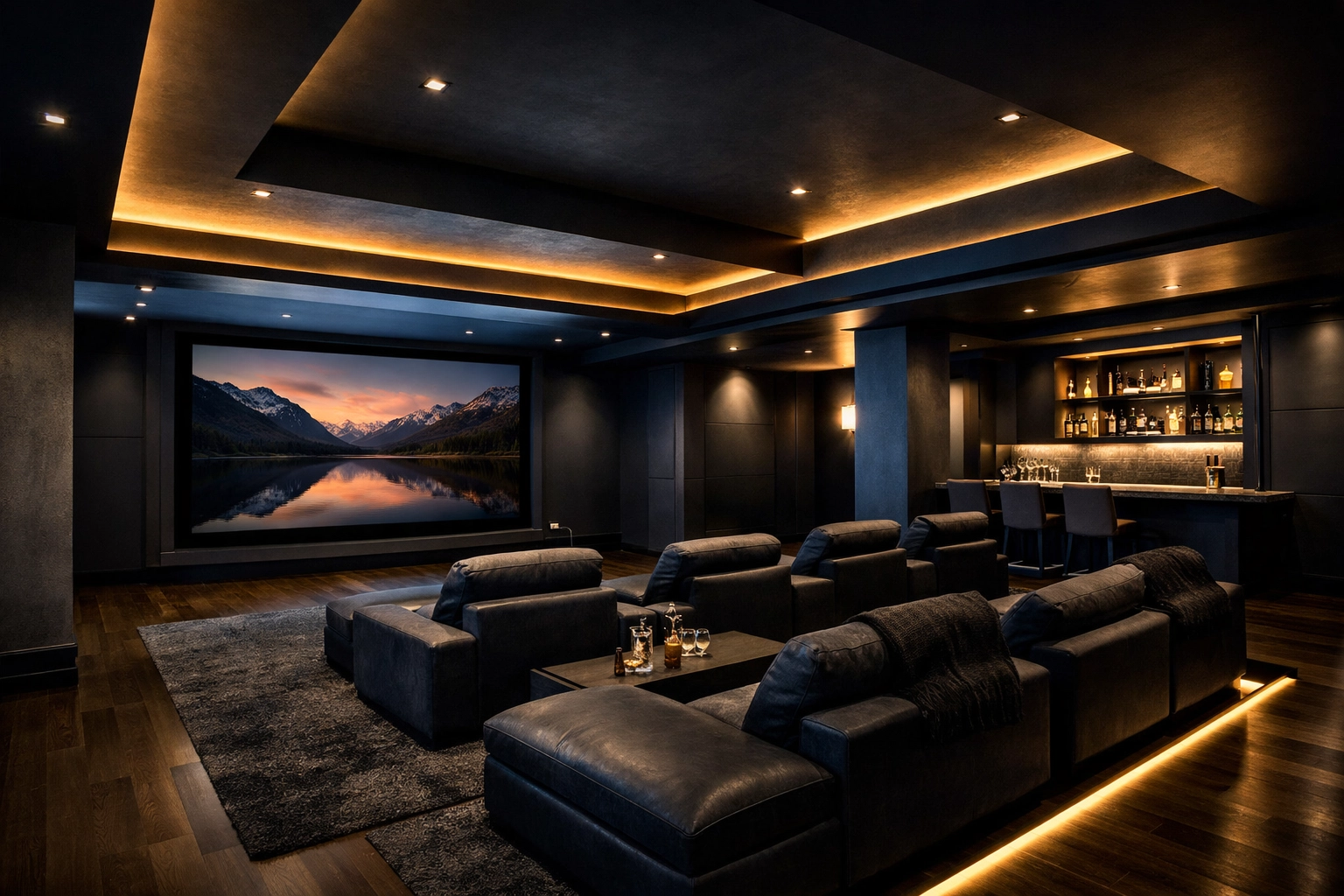
3. What’s the Primary Mission?
How are you actually going to use this space? This might seem like a "duh" question, but hear me out.
- The Cinephile: You want the lights off, the popcorn ready, and a 4K image that makes you feel like you're on the film set.
- The Gamer: You need low lag times, high refresh rates, and a sound system that lets you hear an enemy sneaking up behind you.
- The Sports Fan: You want multiple screens or a massive display that looks great even with the lights on so you can see your snacks.
Knowing your primary use helps us pick the right tech. If you’re mostly watching Sunday football, we might suggest a high-brightness video distribution setup rather than a traditional darkened-room projector.
4. Audio is 50% of the Experience
Most people focus on the screen, but real talk: the sound is what makes the experience immersive. Think about it: hearing a lion’s roar echo in your room as opposed to a simple meow coming from your TV speakers is what creates that "wow" factor.
Before the consultation, think about whether you want visible floor-standing speakers (which can look very cool) or "invisible" in-wall and in-ceiling speakers for a cleaner look. Also, consider the neighbors or the rest of the family. Do we need to talk about soundproofing so your late-night action movies don't wake up the kids?
5. The Great Display Debate: Projector vs. TV
This is one of the most common questions we get.
- Projectors: These are the gold standard for that "true cinema" feel. They can give you a 120-inch (or larger) screen that fills your field of vision. However, they usually require a darker room to look their best.
- Large-Format TVs: Today’s LED and OLED TVs are getting massive (up to 98 inches and beyond) and they look incredible even in bright rooms. They’re "grab-and-go": just turn them on and they work perfectly every time.
Your room's lighting and your viewing habits will dictate which way we go. If you want a theater in a room with lots of windows, a high-end TV might be the winner. If you have a dedicated basement space, a projector is often the way to go.
6. Lighting and Atmosphere
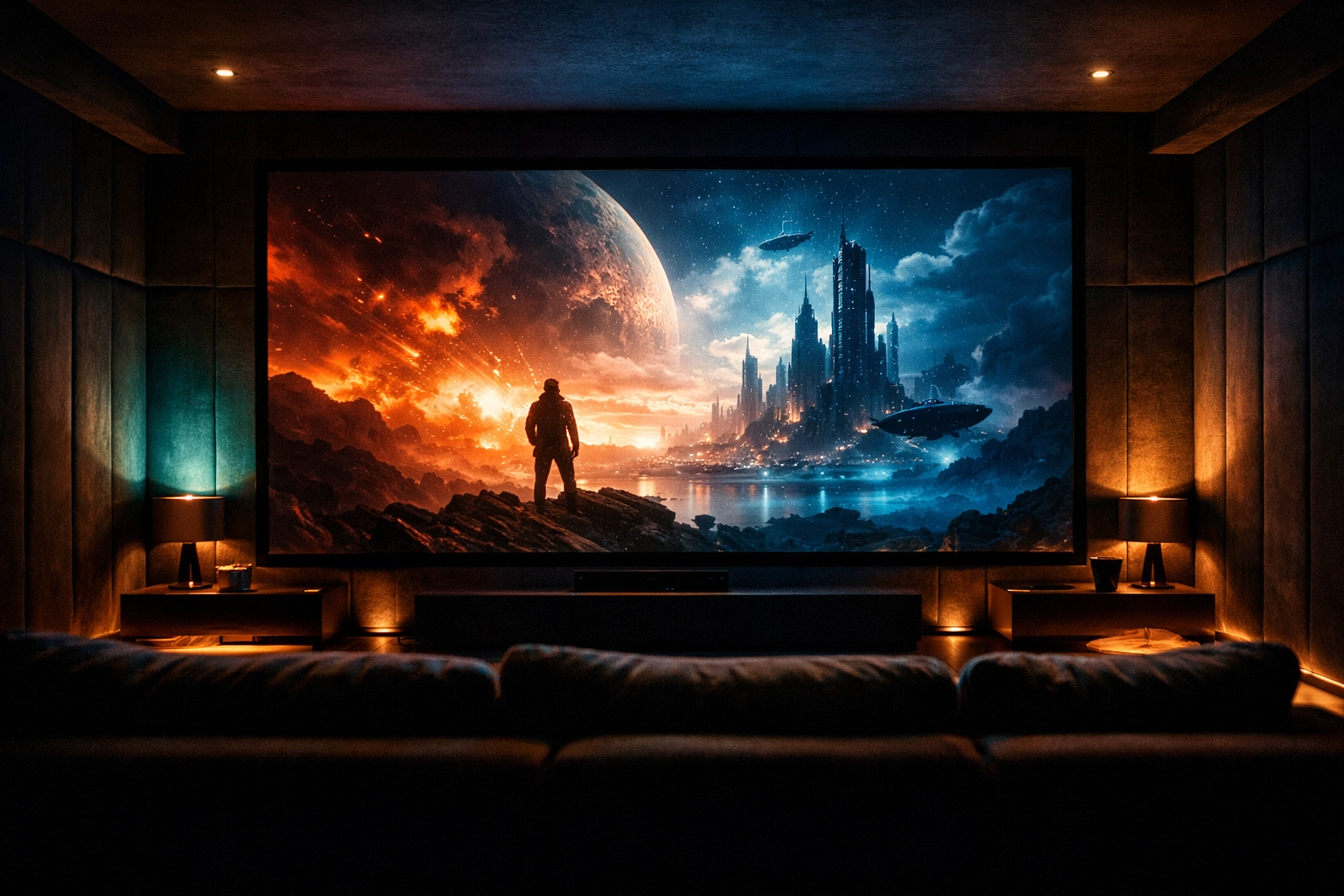
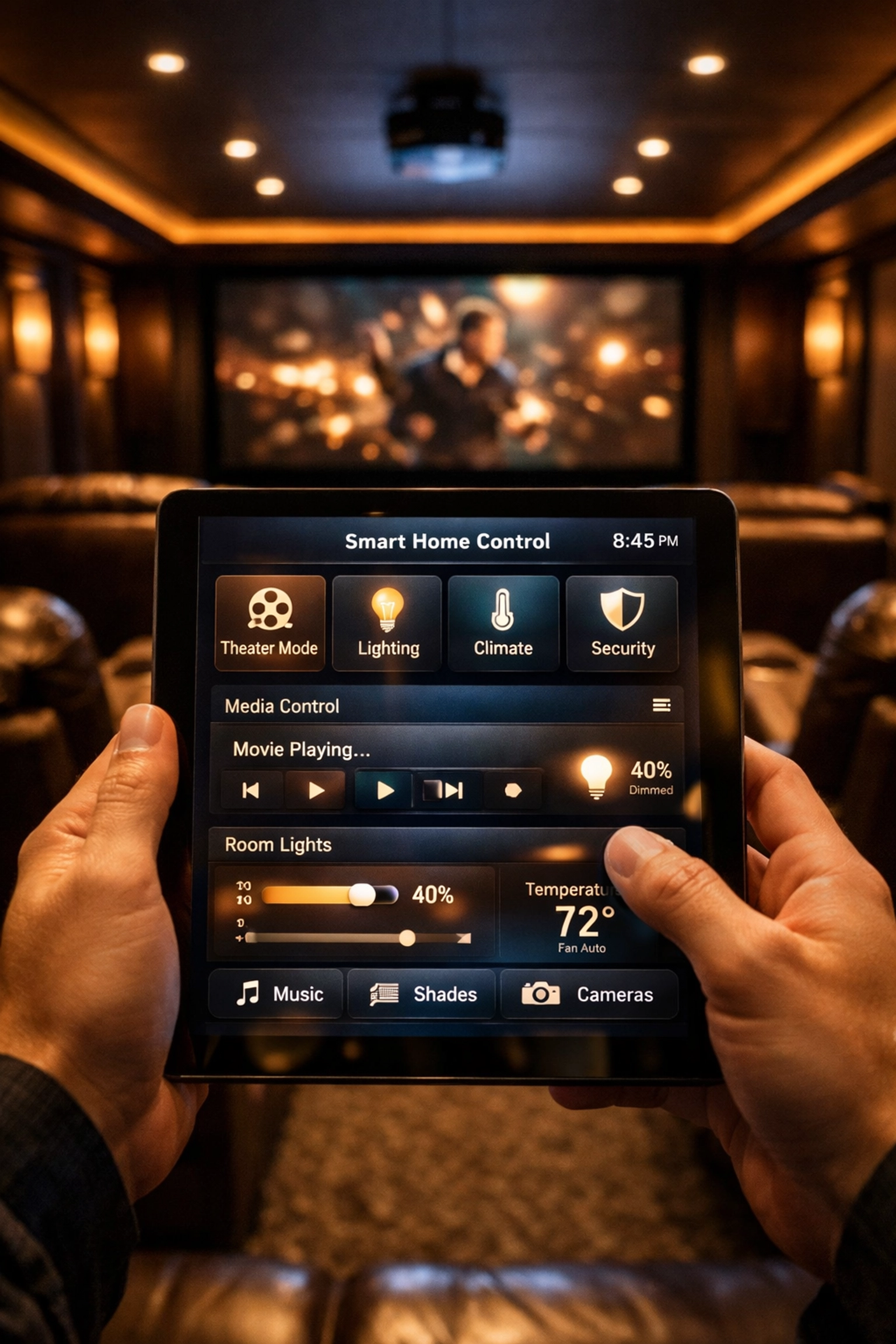
You can have the best screen in the world, but if there's a streetlamp reflecting off it, the experience is ruined. During your consultation, we’ll look at how to control the light. This is where smart home integration becomes your best friend.
Imagine pressing a "Movie" button on your remote, and the motorized shades close, the lights dim to 10%, and the projector warms up. It’s not just fancy: it’s functional. Plus, it adds that "cool factor" that makes your house the place to be.
7. Seating and Sightlines
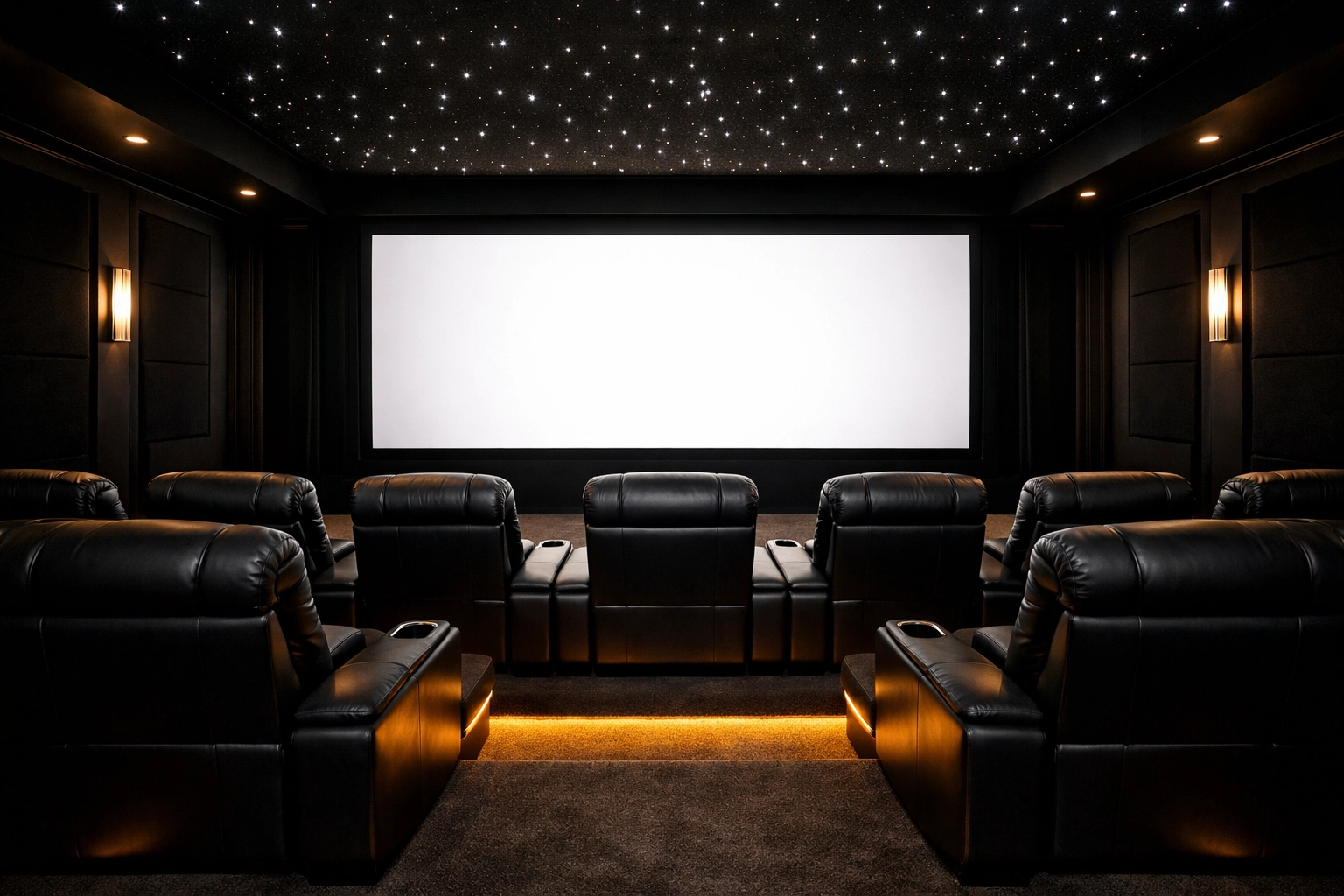
Where is everyone going to sit? You need to think about how many people you want to host on a regular basis. If you have three rows of seating, the back row needs to be elevated (a riser) so they aren't just staring at the back of someone's head.
Also, think about the type of seating. Do you want individual leather recliners with cup holders, or a giant, comfy sectional where the whole family can pile on? This affects the acoustics and the layout of the entire room.
8. The "Guts": Wiring and Infrastructure
This is the part most people overlook because it isn't "sexy," but it's the most important for a reliable system. We need to know what's behind your walls. Is the basement finished? Do we have access to the ceiling?
If you’re currently building or remodeling, now is the time to call us. It is significantly cheaper and easier to run wires while the studs are exposed than it is to retro-fit them later. We’ll also need to talk about your internet: streaming 4K movies requires a rock-solid network, so we might need to look at your Wi-Fi and hardwired data points.
9. Future-Proofing (Don't Get Left Behind)
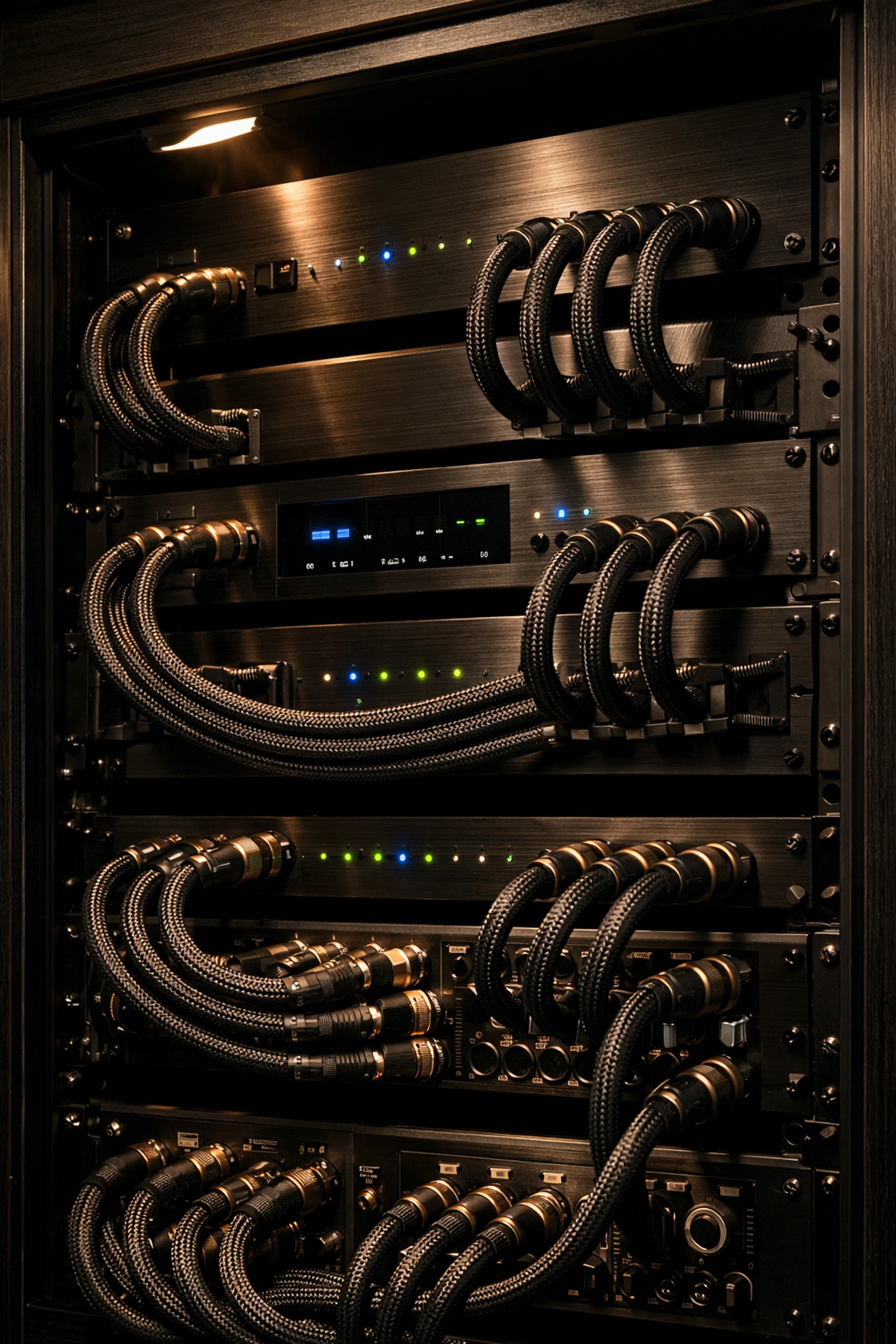
Technology moves at the speed of light. While you don't always need to buy the newest thing the second it drops, you do want a system that can grow with you. We design our systems with "expandable" bones.
This means using high-quality cables that can handle the next generation of video signals and choosing receivers that can be updated. You don't want to spend thousands today only to find out your system is obsolete in two years. We help you stay ahead of the curve.
10. Pro Install vs. DIY: Why It Matters
Look, I love a good DIY project as much as the next guy. But when it comes to home theaters, the difference between a "DIY job" and a professional A/V integration is night and day.
A pro doesn't just "plug things in." We calibrate the audio so it hits your ears perfectly regardless of where you sit. We tune the video so the blacks are deep and the colors are accurate. We integrate the security systems and HVAC control so you can manage your whole home from the same seat you watch movies in.
Real talk: A professional installation saves you the headache of troubleshooting why the sound isn't working or why the remote won't talk to the Apple TV. We do the heavy lifting so you can just enjoy the show.
Ready to Start?
Now that you've got these 10 points in mind, you're more than ready for a consultation. You’ve done the thinking, you’ve got the vision, and you’ve got a rough idea of the "where" and "how much."
At New Age Technology, we take pride in turning these ideas into reality. Whether you're in Golden Valley, St. Louis Park, or anywhere in the Twin Cities area, we're here to help you build something incredible.
The bottom line: A home theater is an investment in your home and your quality time. Let’s make sure it’s done right the first time.
So, what do you say? Ready to bring the cinema home? Check out our home theater services and let’s get a conversation started. Your future movie nights are going to be legendary.