

So, you’ve finally decided to pull the trigger. You’re tired of the "standard" living room setup where the sun glares off the screen at 3:00 PM and the audio sounds like it’s coming from a tin can at the bottom of a well. You want the real deal, a space where the floor shakes during an explosion and the picture is so crisp you can count the whiskers on a lion’s face.
But here’s the real talk: a custom home theater installation is a lot more than just buying the biggest screen you can find and plugging in some speakers. If you go in without a plan, you might end up with a very expensive room that feels… off.
At New Age Technology, we’ve seen it all. We’ve rescued DIY projects that looked like a spaghetti factory of wires and helped homeowners turn basement storage rooms into the crème de la crème of cinema. Before you start swinging hammers or ordering gear, here are 10 things you absolutely must know to ensure your project is a game-changer, not a headache.
1. The Room Dictates the Rules
Think about it: you wouldn't try to park a semi-truck in a compact car space. The room you choose is the foundation of everything. Are you looking at a dedicated theater, a windowless room specifically for movies, or a "media room" that doubles as a place to watch the game with the lights on?
A dedicated theater gives you total control over light and sound, but it’s a "one-trick pony" (albeit a very cool one). A shared space, like a walk-out basement or a living area, requires more creative video distribution and lighting solutions.
The takeaway: Don't fight your room. If it has massive windows and high traffic, plan for a high-brightness setup. If it’s a dark basement, you’re already halfway to cinema heaven.
2. Physics is Your Best Friend (or Worst Enemy)
We won't get too deep into the weeds of acoustic science, but room proportions matter. Perfectly square rooms are actually a nightmare for sound. Why? Because sound waves bounce back and forth and "stack up," creating muddy bass and weird echoes.
A rectangular room is usually the sweet spot. If you’re building from scratch, aim for a length-to-width ratio that isn't a simple multiple (like 10×20). If you already have the room, don't panic, that’s where customized solutions like acoustic panels come in.
3. Seating: The Anchor of Your Design
Here’s a pro tip: lock in your seating before you buy your screen. It sounds backward, right? But seating drives everything else. Where you sit determines the viewing angle, the speaker placement, and even where the door should go.
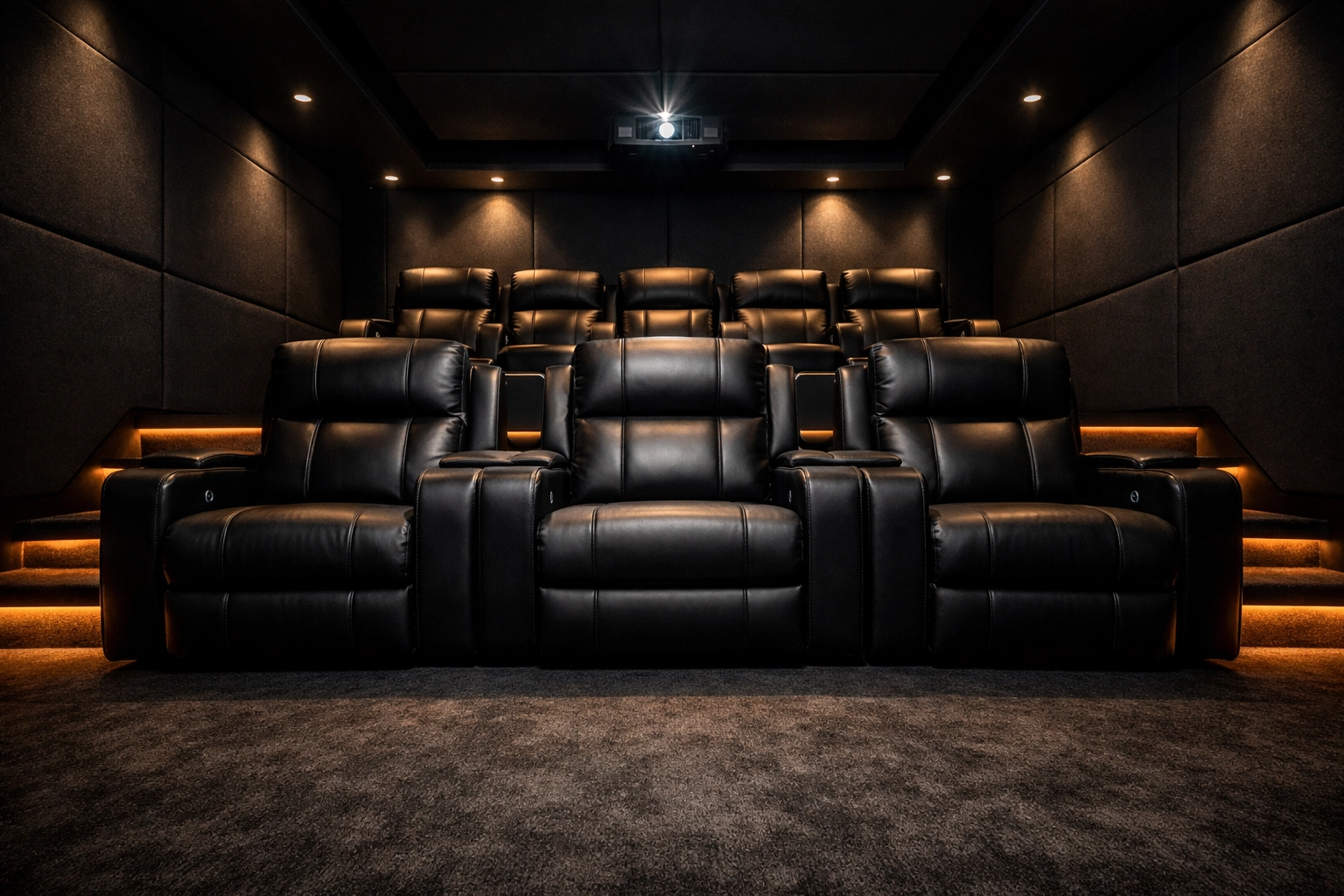
Think of it like a cockpit. You want to be in the "sweet spot" for audio. If you have two rows of seats, you’ll need risers (usually about 12 inches high) so the people in the back aren't just watching the back of your head. Real talk, mark the layout on the floor with blue painter's tape and actually sit there. It’ll save you a world of hurt later.
4. Distance vs. Screen Size
Everyone wants a massive screen, but there is such a thing as "too big." If you sit too close to a giant screen, you’ll be turning your head back and forth like you’re watching a tennis match. Not exactly the relaxing Friday night you planned.
The general rule is to sit about 1.5 to 2.5 times the diagonal length of your screen away. If you’re looking at a 120-inch screen, you want to be roughly 15 feet back. If your room is smaller, a slightly smaller screen will actually look better and more immersive because your eyes can take it all in at once.
5. The Great Debate: Projector vs. TV
This used to be a simple choice: "Big = Projector, Small = TV." But the lines have blurred.
- Projectors: Still the king of the "true cinema" feel. You get massive scale (100-150+ inches) for a lower cost-per-inch than a TV. However, they need a dark room and involve more installation pieces, the projector, the screen, and the mounting.
- LED/OLED TVs: These have gotten huge (98 inches and up) and incredibly bright. They are easier to install and work great in rooms with some natural light.
If you want that "wow" factor when the lights go down, go projector. If you’re in a multi-purpose room in Golden Valley, a massive LED might be the smarter play.
6. Speaker Layout: More Isn't Always Better
You’ll hear numbers like 5.1, 7.1, or 5.2.4 thrown around. Let’s break that down:
- The first number (5 or 7) is your ear-level speakers (Front, Center, Surround).
- The second (1 or 2) is the number of subwoofers.
- The third (the .2 or .4) is your height or "Atmos" speakers.
A 5.1.2 system that is perfectly placed will sound ten times better than a 9.2.4 system thrown together haphazardly. It’s all about the angles. Your center channel, where the dialogue comes from, needs to be at ear level or angled perfectly toward the seats.
7. Bass Management: Don't Wake the Neighbors
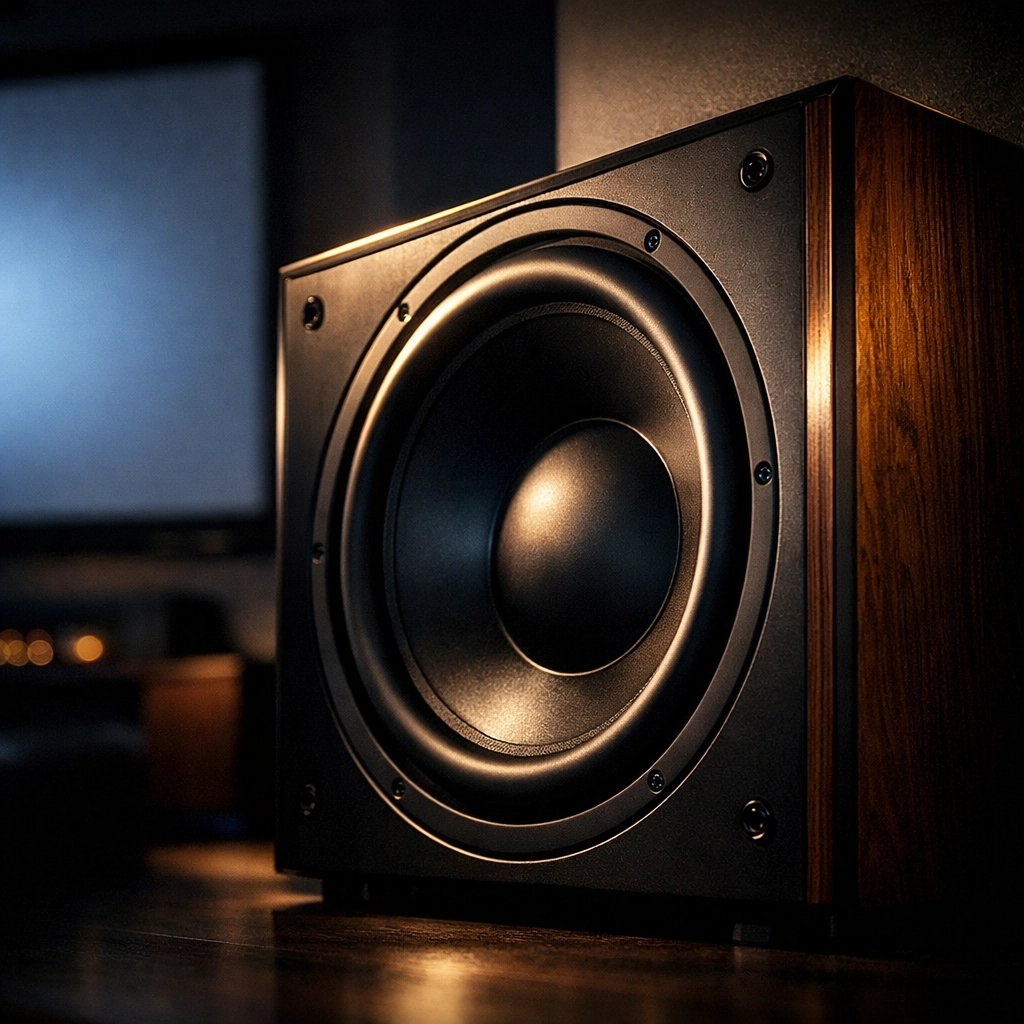
Subwoofers are the soul of a custom home theater installation. They provide that low-end rumble you feel in your chest. But bass is finicky. If you put a sub in a corner, it might sound "boomy." If you put it in the wrong spot, it might sound like nothing at all.
Oftentimes, two smaller subwoofers are better than one giant one. They help distribute the bass evenly so every seat feels the vibration, not just the person sitting next to the box.
8. The "Guts" (Wiring and Power)
This is where DIY-ers usually hit a wall. You need specialized, in-wall rated wiring (CL2 or CL3) to stay up to code and ensure signal quality. Plus, you need to keep your power cables away from your audio cables. If they run parallel to each other, you’ll get a nasty "hum" through your speakers that will drive you crazy.
Also, think about your network. Streaming a 4K movie requires a massive amount of data. Relying on Wi-Fi is a recipe for the dreaded buffering circle. Hardwire your equipment with Cat6 cable to ensure a rock-solid connection. Check out our residential services for more on how we handle the hidden "guts" of a system.
9. Controlling the Environment
The best tech in the world won't save you if the room is too bright or the walls are bouncing sound like a racquetball court.
- Acoustics: Add some soft surfaces. Carpet, heavy curtains, or specialized acoustic panels will soak up the "noise" and let the "sound" shine.
- Lighting: You need lighting control that integrates with your theater. When you hit "Play," the lights should dim automatically. It’s not just for show; it’s a game-changer for the overall experience.
10. Calibration: The Secret Sauce
Once everything is plugged in, you aren't done. This is the part most people skip, and it’s the most important. Every room sounds and looks different. Professional calibration involves using microphones and software to adjust the timing and levels of every speaker so they work together as one unit.
We also calibrate the video. Out of the box, most TVs and projectors are set to "Store Mode": which is way too bright and blue. We dial it in to match the filmmaker’s original intent.
Put It All in the Palm of Your Hand
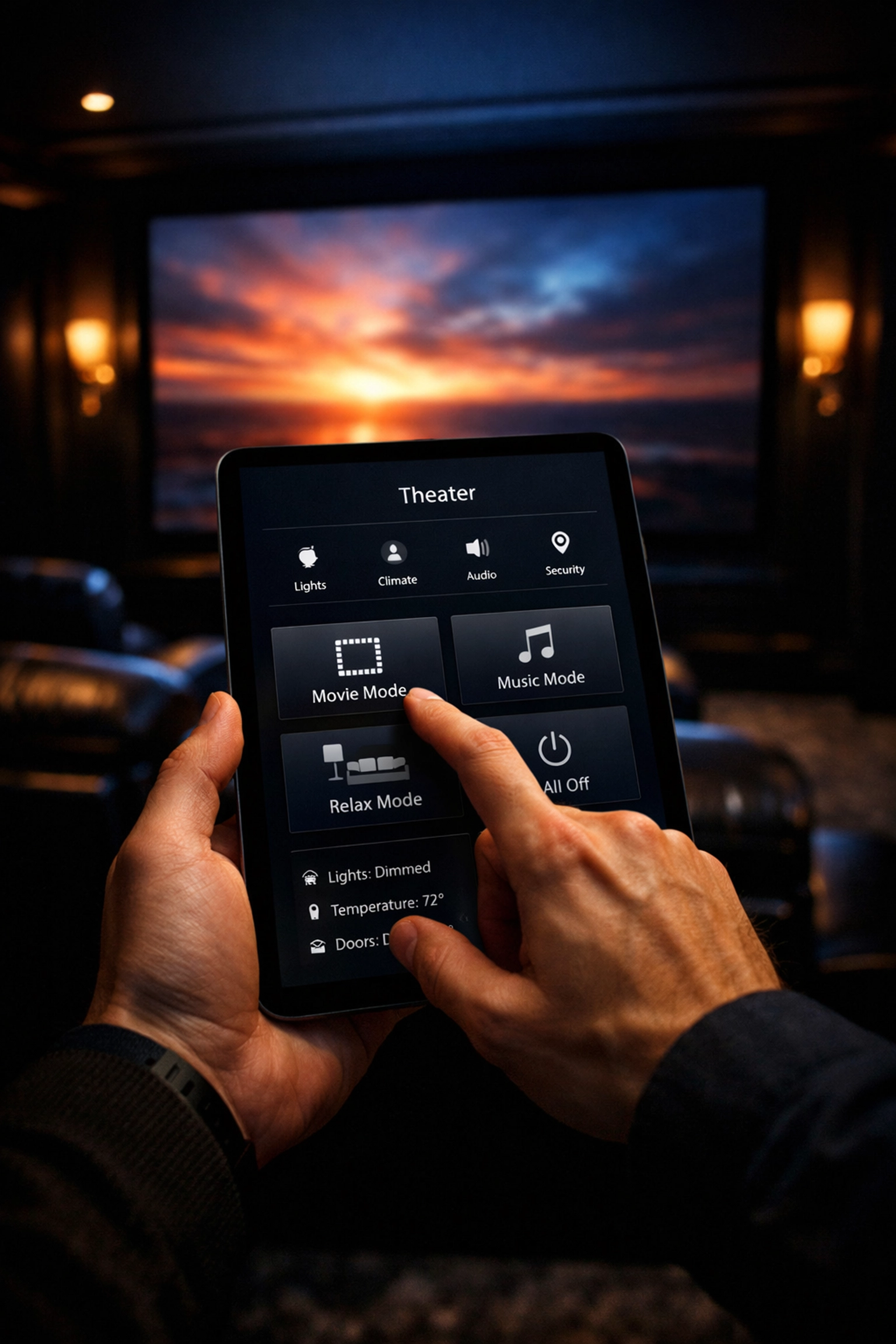
The final piece of the puzzle is how you use it. You shouldn't need five different remotes and a degree in engineering to watch a movie. Our goal at New Age Technology is to give you palm of your hand control. One button press turns on the projector, drops the screen, dims the lights, and starts the movie.
Think of it like this: you wouldn't jump into building a house without a blueprint. A home theater is no different. Whether you're in St. Louis Park or anywhere in the Twin Cities, we’re here to help you navigate the technical stuff so you can get to the good part: the popcorn and the movies.
Bottom Line
Building a custom home theater is an investment in your home and your lifestyle. It’s where your family will gather for years to come. By focusing on the room, the layout, and the professional "finishing touches," you’ll ensure that your theater is a place of joy, not a collection of expensive frustrations.
Ready to start planning? Contact us today and let’s talk about how to bring the cinema experience to your home. We specialize in customized solutions that fit your space and your budget, ensuring you get the performance you deserve without making your wallet cry.