
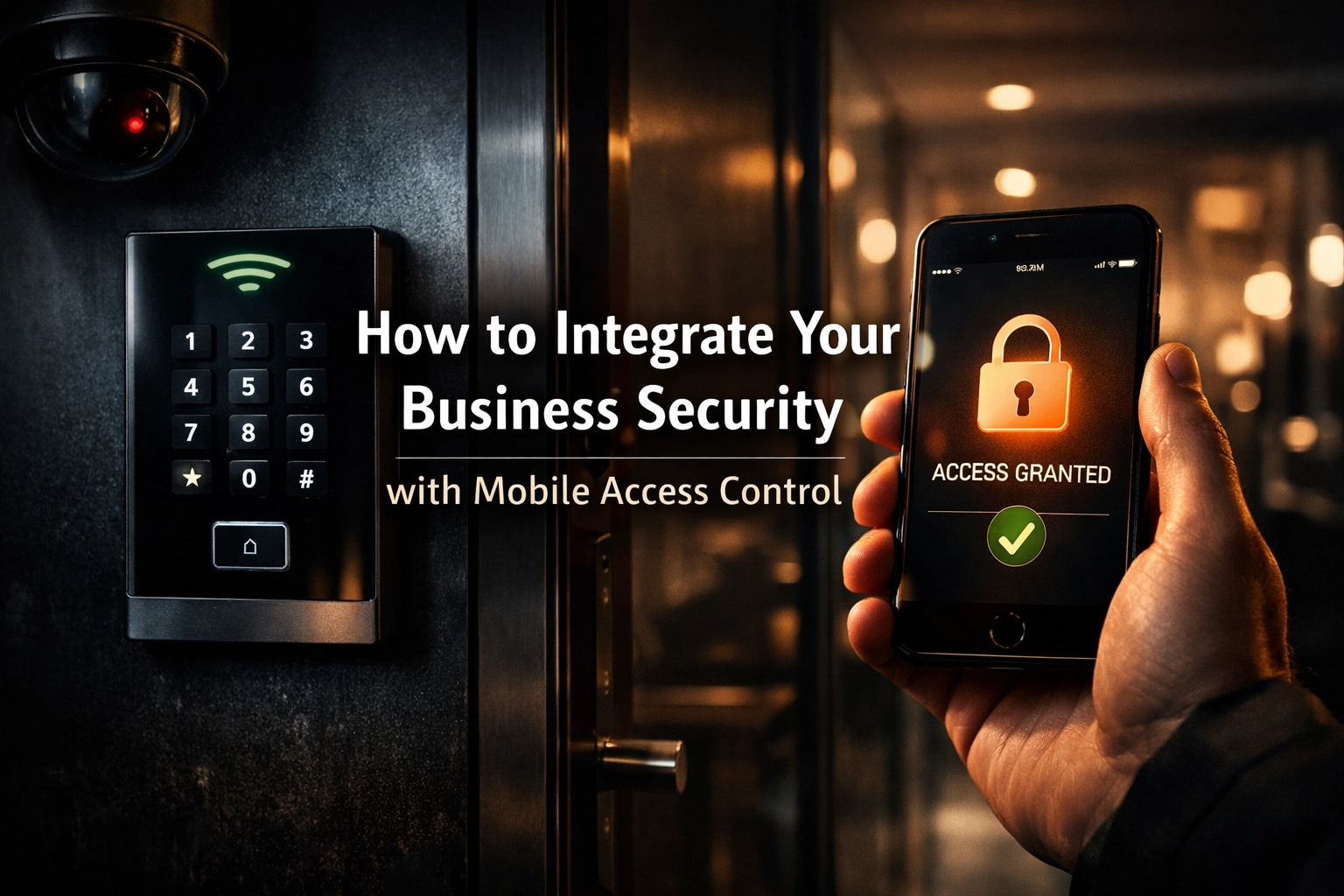
Think about the last time you had to deal with a lost office key. It’s never just a "quick fix," is it? You’re looking at the cost of a locksmith, the time spent cutting new keys, and the nagging anxiety that a physical key to your livelihood is just floating around out there in the world. Now, imagine an employee leaves the company on less-than-ideal terms. If they have a physical key, you’re looking at a full re-key of the building just to sleep soundly at night.
Here’s the deal: physical keys are a relic of the past. In the modern business world, your security needs to be as fast and flexible as your team. That’s where mobile access control comes in. It turns every smartphone into a high-security credential, allowing you to manage who goes where, and when, right from the palm of your hand.
At New Age Technology, we’ve seen how this tech transforms businesses from Golden Valley to Minnetonka. It’s not just about "locking doors": it’s about creating a unified, high-octane security ecosystem. Let’s dive into how you actually make the jump from old-school locks to a fully integrated mobile setup.
Why Mobile Access is a Total Game-Changer
Before we get into the "how," let’s talk about the "why." Real talk: mobile access control is about more than just looking cool (though it definitely does). It’s about operational efficiency.
When you move your business security to a mobile-first platform, you’re eliminating the "grab-and-go" vulnerability of physical cards and fobs. People lose fobs all the time; they rarely lose their phones. And even if they do, those phones are usually protected by biometrics like FaceID or a passcode. That’s a built-in layer of multi-factor authentication you get for free.
Plus, the remote management aspect is the real "crème de la crème." If a delivery driver shows up at your warehouse in Shakopee while you’re stuck in a meeting in Wayzata, you can verify their identity via your camera and buzz them in from your phone. No more rushing across town or leaving doors propped open.
Step 1: The "No-BS" Security Audit
You wouldn't jump into a major renovation without checking the foundation, right? The same logic applies here. Before you start buying hardware, you need to assess your current setup.
Walk your property. Which doors are your primary entry points? Do you have high-security areas like server rooms or executive suites that need tighter restrictions? Think about the "flow" of your business. If you have a rotating door of contractors or part-time staff, your needs are going to be very different than a small office with five permanent employees.
Pro Tip: Document your "pain points." If your current struggle is tracking who entered the building at 2:00 AM on a Saturday, that’s a specific integration goal we need to solve.
While New Age Technology is widely known for designing the most sophisticated home security systems Minneapolis residents rely on, we apply that same obsessive attention to detail to commercial security audits. We look for the "weak links" in your perimeter so your mobile integration covers all the bases.
Step 2: Choosing Your Platform (Cloud is King)
Now, here is the truth: not all access control systems are created equal. You have two main choices: On-premise or Cloud-based.
If you go with an on-premise system, you’re stuck managing a server in your building. It requires manual updates, IT oversight, and if that server goes down, you’re in trouble. Cloud-based systems, on the other hand, are the way of the future.
With a cloud-based platform, everything lives in a secure digital environment. This allows you to:
- Grant or revoke access instantly from anywhere in the world.
- Receive automatic software updates (no more "Version 2.0" headaches).
- Scale easily. Adding a new office in St. Louis Park? You can manage it from the same dashboard as your main branch.
When we talk about enterprise-grade security, we’re looking for systems with 256-bit encryption. That’s the same level of security banks use. You want to make sure your data is locked down tighter than a drum.

Step 3: Integrating Video Surveillance
If you have a mobile access control system but no video integration, you’re only seeing half the picture. Integration is the "secret sauce" that makes your business security actually smart.
Think of it like this: your access control tells you whose phone unlocked the back door. Your integrated video surveillance shows you if it was actually that employee, or if they were being followed by someone they shouldn't have let in.
When these systems talk to each other, you get "visual verification." Every time a door is opened, your system can trigger a short video clip and send it to your phone. It turns a simple log entry into a verified event. This is especially vital for businesses in high-traffic areas like Brooklyn Park or Coon Rapids, where keeping an eye on multiple entrances is a full-time job.
Step 4: The Hardware – Readers and Controllers
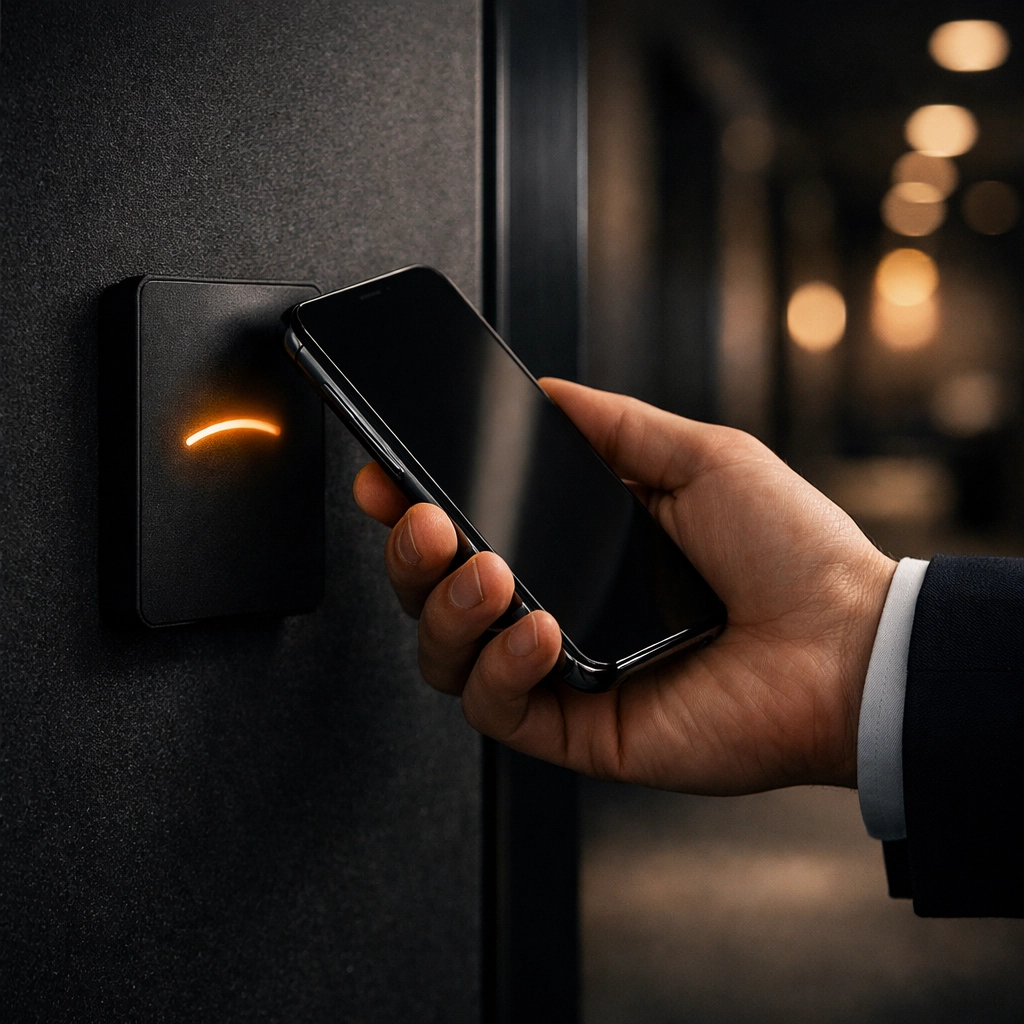
You’ve got the software, now you need the gear. For a mobile-first system, you need "Smart Readers." These are the sleek devices that sit next to your doors and communicate with smartphones via Bluetooth or NFC (Near Field Communication).
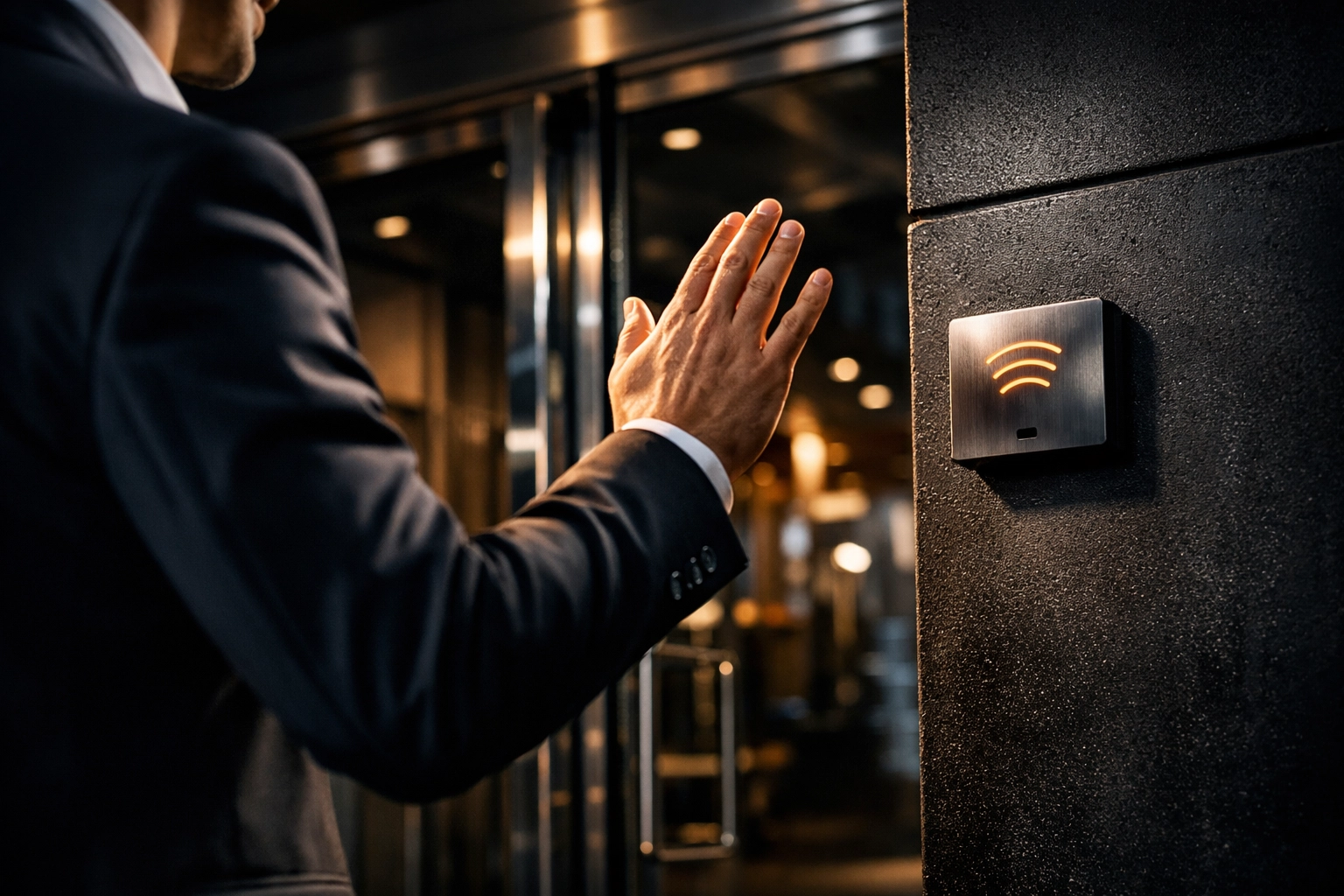
Some systems allow for "Wave to Unlock," where the user doesn't even have to take their phone out of their pocket. They just wave their hand in front of the reader, and the Bluetooth signal does the rest. It’s convenient, it’s fast, and it won't make your wallet cry when you realize how much time you're saving on administrative overhead.
Behind the scenes, you’ll have controllers. These are the "brains" wired into your doors that actually trigger the locks. Integration means these controllers are also linked to your alarm system. If a door is forced open without a valid mobile credential, the alarm goes off, the cameras start recording at high resolution, and you get an instant notification.
Step 5: A Phased Implementation Strategy
Look, I get it. Replacing every lock in a 20,000-square-foot facility sounds like a nightmare. But here’s some "real talk": you don’t have to do it all at once.
We often recommend a phased approach. Start with your main perimeter doors: the spots where the most "unknowns" enter your building. Once your team is comfortable using their phones to get in the front door, you can migrate internal doors, server rooms, and storage closets over time.
This allows you to test the connectivity and make sure your Wi-Fi or cellular network is strong enough to handle the communication between the readers and the cloud.
Beyond the Door: Visitor Management
Integration doesn't stop with your employees. What about visitors, contractors, or that guy coming to fix the HVAC in your Plymouth office?
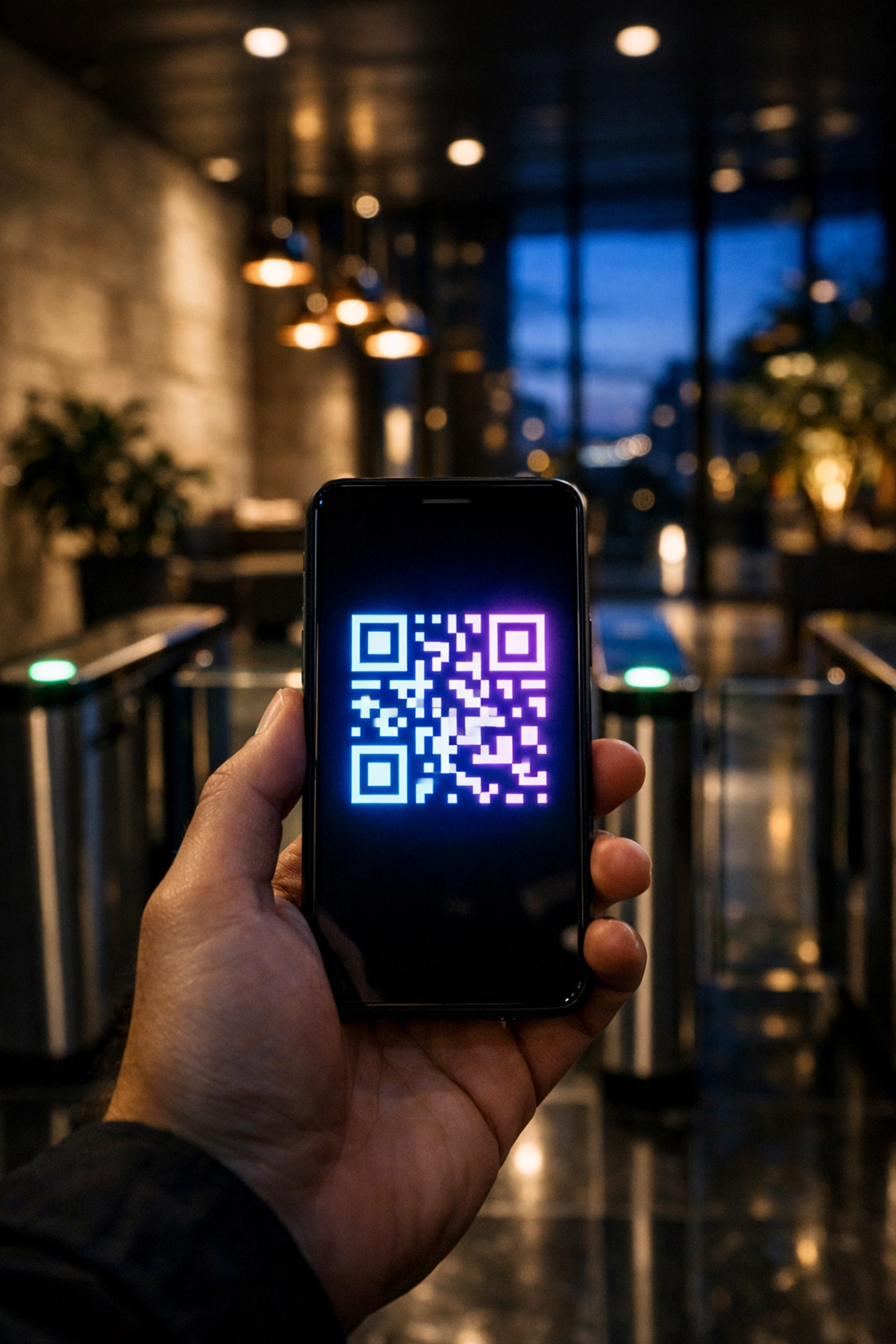
A fully integrated system allows for "digital guest passes." You can text a temporary QR code or a time-limited mobile link to a visitor’s phone. They can use that to enter the building during their scheduled window, and the second they leave, the "key" expires. No more handing out "Visitor" badges that inevitably disappear.
The Bottom Line
Integrating your business security with mobile access control isn't just a tech upgrade; it’s a total shift in how you protect your assets. It moves security from a reactive "lock the door and hope for the best" mindset to a proactive, data-driven strategy.
You get real-time insights into how your building is being used, you eliminate the risk of physical key duplication, and you gain the peace of mind that comes with total remote control. Whether you’re managing a single boutique in Wayzata or a multi-site operation across the Twin Cities, this is the move that future-proofs your business.
Ready to stop carrying that heavy ring of keys and start managing your security like a pro? At New Age Technology, we specialize in making complex integrations feel like a breeze. Let’s get your business on the map with a security system that actually works for you.
Give us a shout, and let's talk about how to make your facility the smartest one on the block. From video surveillance to custom A/V, we’ve got you covered. After all, your business deserves the "crème de la crème" of protection.