

So you've decided to build a custom home theater in your Minneapolis home. Maybe those long Minnesota winters finally convinced you that a killer movie room is worth the investment. Or perhaps you're tired of squinting at a too-small TV while the neighbor's kid mows the lawn right outside your window during the big game.
Here's the deal: building a home theater sounds straightforward until you're knee-deep in speaker wire, staring at a screen that's either too high or too small, wondering why your surround sound makes everything echo like you're in a cave.
The good news? Most of these problems are totally fixable. The better news? You can avoid them entirely if you know what to watch out for. Let's break down the seven most common mistakes Minneapolis homeowners make with custom home theater installation, and exactly how to fix them.
Mistake #1: Picking the Wrong Room
This one trips up a lot of folks. You've got that gorgeous sunroom with floor-to-ceiling windows overlooking your backyard. Great natural light, right? Perfect for a home theater? Not so much.
Here's the problem: windows are the enemy of picture quality. All that beautiful Minneapolis daylight, yes, even the gray winter kind, creates glare that washes out your projector image or makes your TV look like it's working at half power. Plus, those hard glass surfaces bounce sound around like a pinball machine, turning your carefully planned audio into a muddy mess.
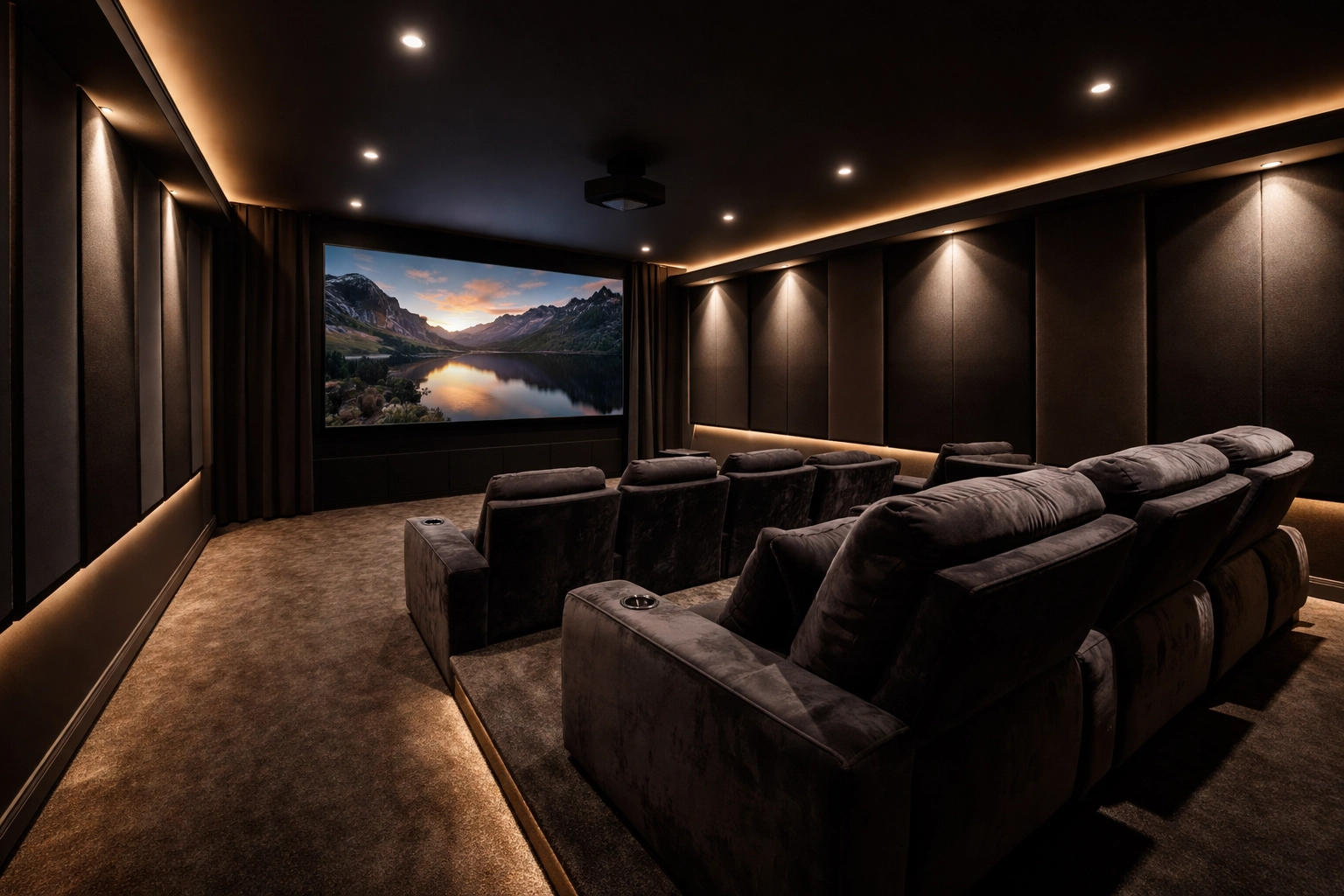
The fix: Look for a rectangular or square-shaped room where you can control light and sound. Basements are popular for a reason, they're naturally dark and often have carpet that absorbs sound. If you're working with a main-floor space, prioritize rooms where you can add blackout curtains and soft furnishings. Avoid rooms with arched ceilings or lots of hard surfaces like marble or tile.
Mistake #2: Putting Speakers Wherever They Fit
We get it. You bought this beautiful set of surround speakers, and now you're trying to figure out where to put them. That shelf in the corner looks good. The top of the bookcase? Sure, why not.
Here's the thing: surround sound formats are designed around specific angles and distances. When you just shove speakers wherever they physically fit, you lose the immersion that makes a home theater feel like, well, a theater. Instead of hearing a helicopter fly over your head, you hear sound coming vaguely from "over there somewhere."
The fix: Follow proper positioning guidelines:
- Front speakers should sit at ear level when you're seated, angled slightly toward your main seating area
- Center channel goes directly in front of you at ear height: this handles most dialogue, so it's crucial
- Surround speakers belong at a 90-110 degree angle, slightly behind your seating position
And here's a pro tip: don't place surrounds too close to sidewalls. That causes sound coloration that makes voices sound weird and unnatural.
Mistake #3: Cheaping Out on the Receiver
You dropped serious cash on those gorgeous tower speakers. You splurged on that 85-inch OLED. And then you grabbed whatever receiver was on sale at the big box store.
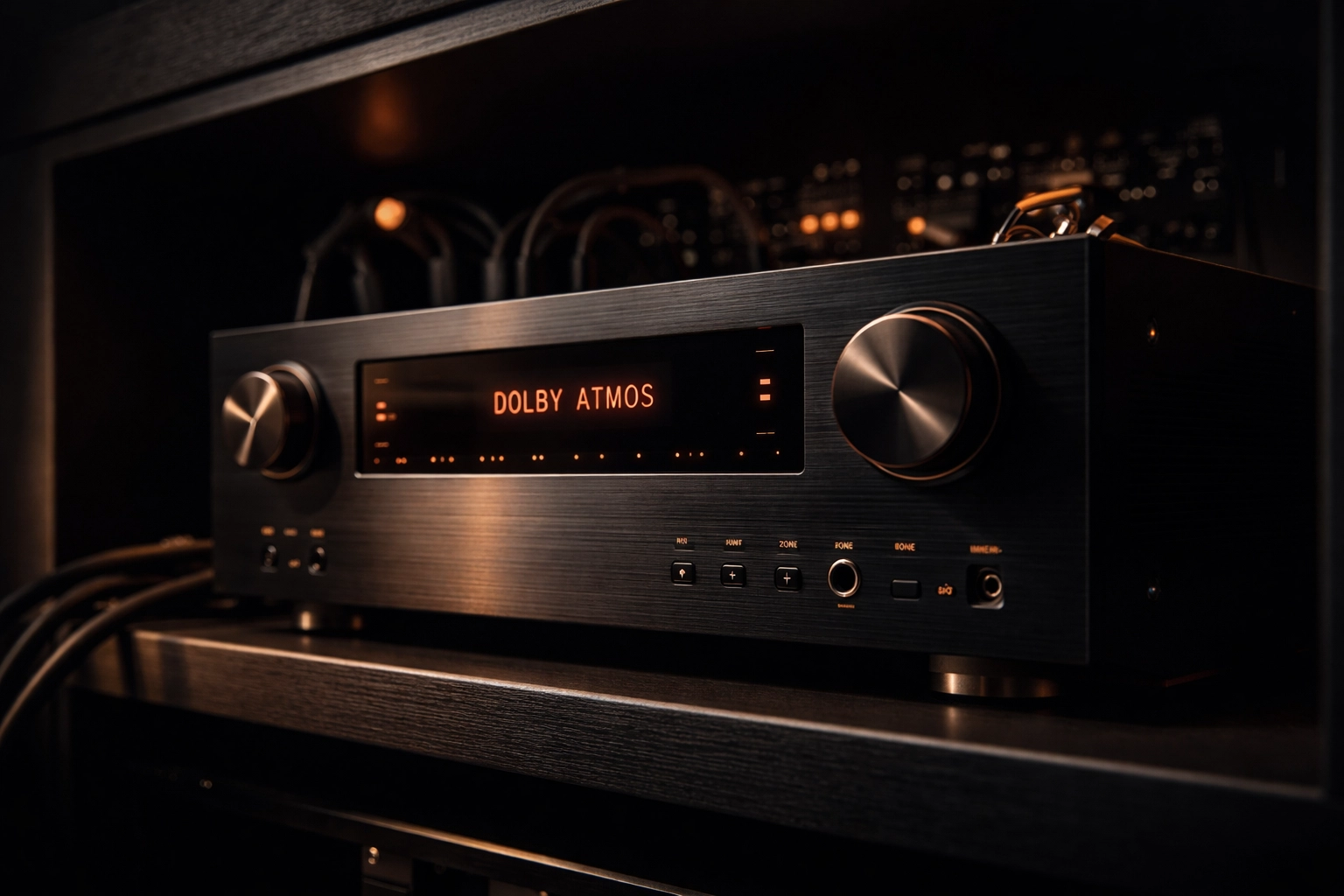
Think of your AV receiver as the traffic controller for your entire system. It's handling three critical jobs: delivering clean power to your speakers, processing all your audio channels, and calibrating sound to your specific room. A budget receiver produces harsh, muddy audio and often forces you to sacrifice features: like cutting your rear surrounds or ditching those cool height speakers for Dolby Atmos.
The fix: Budget proportionally. If you're investing in quality speakers and a premium display, your receiver needs to match. This doesn't mean buying the most expensive option on the market, but it does mean allocating adequate budget for something that won't bottleneck your whole system.
Mistake #4: Mounting Your TV Too High
This is the classic "above the fireplace" mistake, and Minneapolis homes are full of them. That beautiful gas fireplace is the focal point of your living room, so naturally, the TV should go right above it, right?
Wrong. Here's real talk: when your TV is mounted too high, you spend the entire movie craning your neck upward. It might look great on your wall, but after a two-hour film, your neck is going to feel like you slept on an airplane.
The fix: Plan for seated eye level first, then build your room design around it. When you're sitting in your main viewing spot, the center of your screen should be roughly at eye level: or just slightly above. If you absolutely must mount above a fireplace, consider a motorized mount that lowers the TV when in use and raises it when you want the fireplace aesthetic.
Mistake #5: Skipping Calibration
Your new system is hooked up. The picture is on. Sound is coming out of the speakers. Good enough, right?
Not even close. Factory default settings are designed to look flashy in a bright showroom, not to perform optimally in your specific space. Every room has different acoustics, different lighting conditions, and different seating distances. Living with uncalibrated equipment is like buying a sports car and never taking it out of first gear.
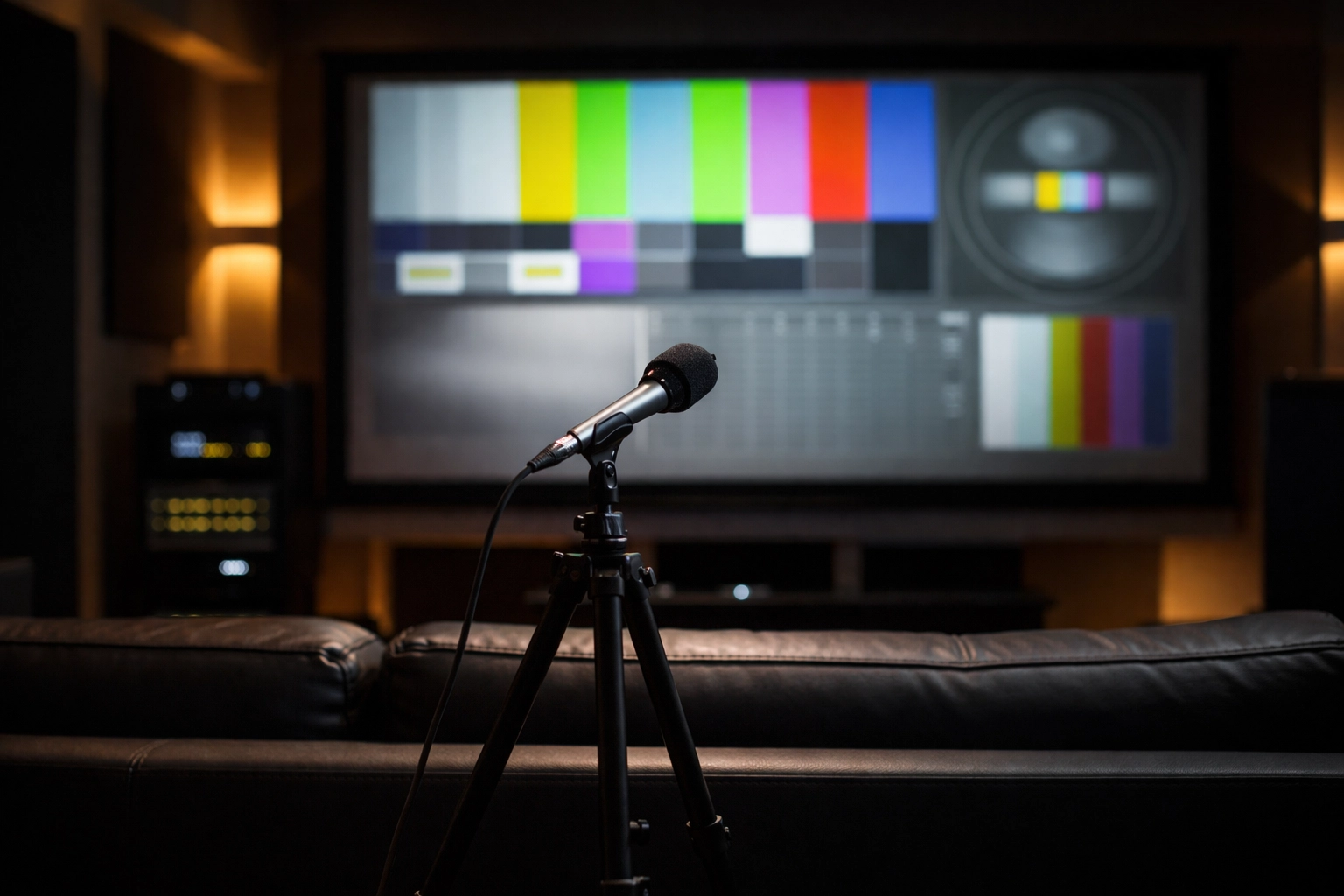
The fix: Take time to calibrate your system: or better yet, have professionals do it. Most quality AV receivers include built-in room correction software that uses a microphone to measure your space and adjust settings automatically. For picture quality, adjust brightness, contrast, and color settings based on your room's ambient light. The difference between calibrated and uncalibrated is honestly night and day.
Mistake #6: Ignoring Cable Management
Nobody wants to talk about cables. They're boring. But here's what happens when you ignore them: you end up with a tangled rat's nest behind your equipment, connection problems that are impossible to diagnose, and potential damage to your gear from cables getting crimped or pulled.
Plus: and this matters in a dedicated theater space: visible cable chaos completely ruins the clean, immersive vibe you're going for.
The fix: Use cable management tools from day one. Label everything. Run cables through walls where possible, use conduit for longer runs, and keep everything organized behind your equipment rack. Trust us, future you will be incredibly grateful when something needs troubleshooting or you want to upgrade a component.
Mistake #7: Mixing Incompatible Components
You found a great deal on that streaming device. Your buddy recommended a specific brand of receiver. And you grabbed a universal remote that claimed to work with "everything."
Now your remote turns on the TV but the receiver stays on the wrong input. Your streaming device loses connection randomly. And getting everything to work together requires a 12-step startup sequence that only you understand.
The fix: Compatibility matters more than individual component quality. Before you buy anything, make sure it plays nicely with your existing gear. Better yet, work with a professional integrator who can select components designed to work together seamlessly. A unified control system: where one app or remote handles everything: transforms your home theater from a frustrating puzzle into the relaxing escape it should be.
Ready to Do It Right?
Look, DIY is great for a lot of home projects. But a custom home theater involves acoustics, electrical work, calibration, and integration that can get complicated fast. And when you're investing in quality equipment, you want to make sure it's performing at its best.
If you're a Minneapolis homeowner thinking about a home theater upgrade: or if you've already made some of these mistakes and want help fixing them: we'd love to chat. At New Age Technology, we've been helping Twin Cities families create incredible entertainment spaces for years. From initial room planning to final calibration, we handle the technical stuff so you can focus on enjoying movie night.
Check out our 5 key considerations when choosing your home theater system for more planning tips, or reach out for a consultation. Let's build something awesome together.